The art of homebrewing requires a balanced coffee to water ratio, optimal water temperature, and appropriate grind size based on your brewing method. Grind size is often overlooked and is the reason why many coffee drinkers fall short of brewing the perfect cup of coffee at home.
The backbone of great coffee is in your grind profile. Regrettably, many high-quality coffees get ruined due to the lack of understanding of this brewing parameter. Often people who brew coffee at home use the wrong size or inconsistent grinds. The results are overly bitter, sour, and diluted coffee due to the under/over-extraction of coffee grinds.
Underestimating the importance of grind size is one of the most common mistakes we have observed over the years. Even the most advanced coffee drinker makes this mistake sometimes. In this article, we will explore the relationship behind grind size and how it ultimately affects brewing coffee at home.
By the end of this article, you will have a good understanding of why it’s worth mastering the technique of choosing the correct grind profile and how to put it into practice. With just a few small tweaks, you can turn that okay tasting cup into a fantastic cup of coffee.
Read on and unlock the full potential of your coffee brewing abilities!
If you already know the importance of grind size, click here to jump to the Coffee Grind Size Chart.
Why (Grind) Size Matters
Your coffee grind sizes matter. It is one of the essential brewing parameters that physically affects the way extraction occurs when brewing coffee. Understanding coffee extraction and how grind size affects it will help you adjust your technique to prevent under and over-extraction.
Extraction is everything that the water takes from the coffee
Baristahustle
Put merely, brewing coffee is defined as the process of extracting and dissolving flavor compounds from roasted beans into water. The result is coffee. A well-balanced and excellent tasting cup requires a delicate balance of water/coffee ratio, water temperature, brew time, and grind size.
The purpose of grinding coffee beans into smaller pieces is to increase the surface area. This allows water to pass through it and extract the flavors from the coffee in the process. When you change the size of coffee grinds, it changes the surface area that comes in contact with water and how fast water passes through (brew time).
The finer your grinds are, the longer it takes for water to pass through it. It also increases your coffee’s surface area, making it easier for water to extract its flavor from your coffee fully.
The opposite is true for coarse grinds. The larger particles of coarser grinds mean the coffee has less surface area, and water can pass through it much quicker. This potentially leaves flavors behind, and less extraction will take place.
The objective of mastering grind size is to avoid having too fine or too coarse a coffee grind.
The combination of larger surface area and longer brew time with finer grinds means more extraction will occur, potentially over extracting your coffee.
On the contrary, coarser grinds have a smaller surface area and looser particles, allowing water to pass through much quicker. Potentially under extracting your coffee, resulting in a poor tasting cup.
Now that you have a better understanding of the relationship between grind size and coffee extraction. Let’s explore how under, and over-extracted coffee tastes in the section below.
How To Spot Poorly Extracted Coffee
We have all tasted a lousy cup of coffee, and if you never have, then consider yourself to be very lucky!
But what causes coffee to taste bad?
Simply put, it’s because of pour extraction.
A well-extracted cup of coffee is the result of balancing all the different brewing variables, such as grind size. Brewing a balanced cup is nothing short of a miracle in the coffee world, and it’s the exact reason you should know what it tastes like how grind size affects it.
Let’s now bring our attention to the extraction scale below to help illustrate this.

Brewing a perfect cup is a balancing act. During the brewing process, the initial compounds extracted from coffee are the acids characterized by sour flavors. The next compounds extracted are the sugars. The last to be extracted are the bitter compounds (1). Each one of these flavor compounds plays a vital role in the final results. Having too much of one will result in a poor tasting cup.
Over Extracted Coffee
Over extraction occurs when there are too many flavors extracted from your coffee beans. Over extracted coffee tastes bitter and is characterized by a dry sandpapery texture and often compared to the texture similar to drinking black tea and dry wine. Although typical in teas and wine, this texture in coffee is a sign of over-extraction (3).
If you are often brewing coffee with these characteristics, your coffee grind is too fine.

Under Extracted Coffee
When you under extract your coffee, essential flavor compounds are left unextracted in your beans after brewing. Under extracted coffee tastes sour and has a thin flavor profile, often characterized as diluted and watery. It is also weirdly salty, a flavor profile. The sourness of under-extracted coffee leaves a biting sharpness on the side of your tongue.
Too coarse a grind causes under-extracted coffee. Water flows too quickly through the grounds, thereby lowering the brew time and leaving essential compounds from being extracted. The sugary and bitter compounds balance out the sour acids in coffee. Without it, your coffee will be overly acidic.
If you are often brewing coffee with these characteristics, your coffee grind could be too coarse. Try a finer grind. Using a finer grind will slow down the water as it passes through your grinds and increase brew time. Also, your water might not be hot enough. Hotter water helps extract flavor compounds from your grounds faster. Make sure to brew at the optimal brewing temperature of 195℉ to 205℉ (90℃ to 96℃).

Grind Consistency: Blade Grinder vs. Burr Grinder
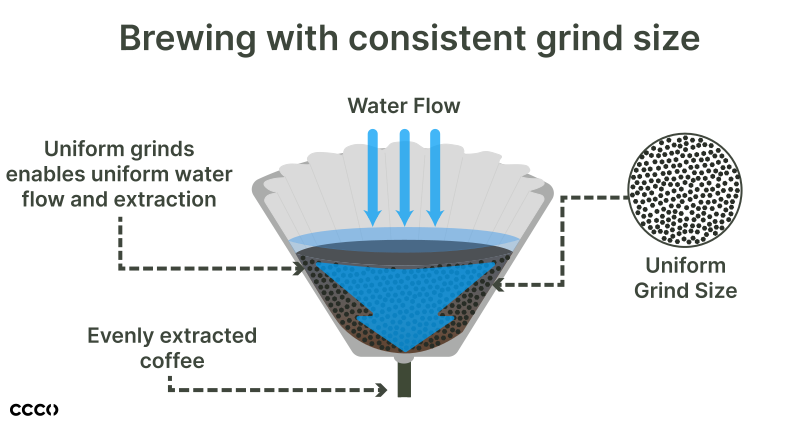
The key to brewing a great cup of coffee is ground consistency and choosing the appropriate grind size. Without uniform grinds, you will end up with different grind sizes, which will negatively affect the extraction process.
When you have a consistent grind where all the individual grounds are the same size, hot water will uniformly extract all the flavors in your coffee.
On the contrary, if you have an inconsistent grind characterized by a mix of coarse and fine grinds, some will be over-extracted and some will be under-extracted.
The results? A very poor tasting cup of coffee.
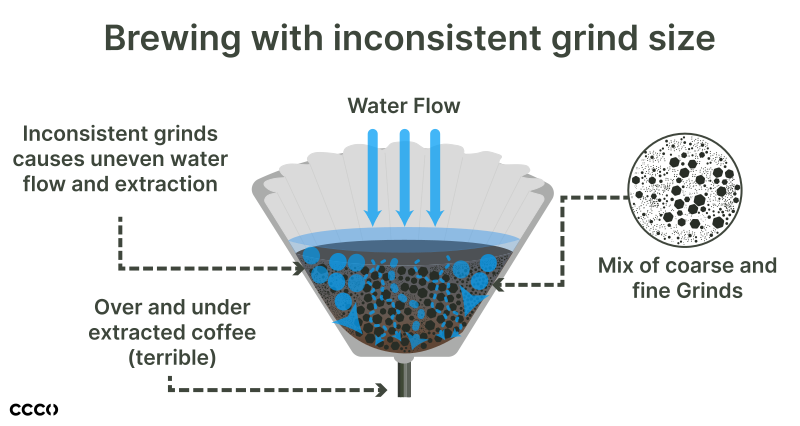
Most coffee beginners choose blade grinders due to their affordable prices. It is a common pitfall many beginners make and will result in mediocre coffee at home. Blade grinders are notorious for producing inconsistent grinds. This is the main reason why every coffee enthusiast leaves their blade grinders for chopping up their spices and not their coffee.
Despite how much you shake your blade grinder, it is almost impossible to get a consistent grind with it. Blade grinders work by spinning a chopping blade fast, which also produces heat from chopping friction. This heat can also degrade your beans before you even start brewing.
Compared to blade grinders, burr grinders uniformly crushes coffee beans instead of chopping them. This leaves you with a consistent grind that would otherwise be impossible to achieve with a blade grinder. Also, burr grinders are adjustable and give you control over the grind size, which is not possible with blade grinders.
To sum it up.
You should consider a burr grinder if you are looking to perfect the art of coffee brewing at home. It is a game-changer. You will have the ability to adjust your grind size to match your brewing method, and you will end up with entirely consistent grinds—both of which are crucial to perfecting coffee extraction and brewing delicious coffee.
Which grind size should you use?
There are seven distinctive coffee grind sizes and it is important to distinguish the difference between them to understand which one to choose for your coffee brewing method.
There is no one perfect grind size for brewing coffee. Instead, you should pick the best grind size for your chosen brewing method.
Coffee Grind Size Chart
How To Use Coffee Grind Size Chart
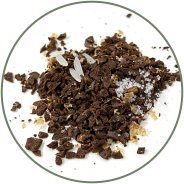
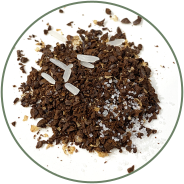
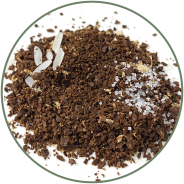
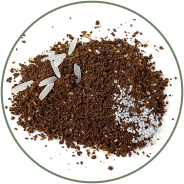
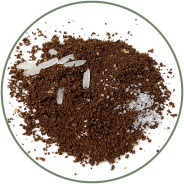
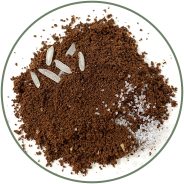
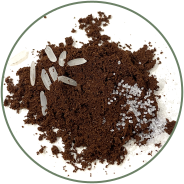
Below we photographed all seven major grind sizes from extra coarse to extra fine. Use these photos as a reference for a starting point to help give you cues that you are close.
All the photos of ground coffee are photographed against white rice and granulated sugar for reference. This is used to help you gauge the difference in grind sizes
You do not need to exactly match our grind sizes to brew tasty coffee. Rather, use these photographs as a ball park and starting point. You can use white rice or sugar against your coffee grinds in your experiments to get into the ballpark of our examples.
1. Extra Coarse Grind
Best suited for:
- Cold brew coffee
This is the largest grind setting on most burr grinders. Extra coarse grinds roughly look like the size of peppercorns. Characteristized by large and chunky grinds.
2. Coarse Grind
Best suited for:
- French press
- Stovetop and electric coffee percolators
- Coffee cupping
Coarse grind looks like chunky sea salt. It is a little finer than an extra coarse grind.
3. Medium Coarse Grind
Best suited for:
- Chemex brewer
- Clever drippers
- Eva solo / cafe solo brewer
Not quite coarse or medium. Medium coarse grind looks like rough and coarse sand.
4. Medium Grind
Best suited for:
- Aeropress
- Drip coffee machines (cone & flat bottom filters)
- Siphon coffee
The all around grind that is used as a great starting point for experimenting with your grind size. Medium grinds is best described as looking similar to regular sand.
5. Medium Fine Grind
Best suited for:
- Pour over coffee (eg: Hario v60, Kalita Wave, and more)
- Aeropress
- Siphon coffee / Vacuum pots
Medium fine grind is slightly finer than the regular medium grind. This grind size is best characterized as the in-between the size of regular sand and table salt.
6. Fine Grind
Best suited for:
- Espresso
- Stovetop Moka pots
- Electric Moka pots
- Aeropress
This is the most common known grind size. Fine grinds are generally what you would get if you ever buy pre-ground coffee. It looks and has a consistency that is slightly finer than table salt.
7. Extra Fine Grind
Best suited for:
- Turkish coffee
It is the finest grind available and only really ever used for brewing Turkish coffee. It is only possible to achieve this fine of a grind with a Turkish coffee grinder. It looks like powder and has a flour-like texture.
Conclusion
If you made it this far down the article, you can consider yourself a coffee grinding expert now!
It can feel a little overwhelming with so many variables involved in brewing great coffee at home. Fortunately, with your new found knowledge on achieving the proper grind size for your brewing method, you set the rest of your brewing process up for success.
Coffee grinds are one of those variables that can involve endless tinkering and tweaking. Especially as you hone your palette and figure out your preferences and take more control over your brewing process. So take it one cup at a time and enjoy the brewing process and you will surely develop a brewing process that matches your coffee preferences.
The grind levels presented here in this article are just to get you in the ballpark. Do experiment and tinker in small increments to extract the flavors you want from your beans. When you pay attention to the small details like coffee grinds, you will be rewarded with amazing coffee.
Happy Grinding!
References
- Coffee Extraction and How to Taste It. (2020, November 20). Retrieved December 02, 2020, from https://www.baristahustle.com/blog/coffee-extraction-and-how-to-taste-it/
- How To Brew Better Coffee By Adjusting Your Coffee Grind Size. (n.d.). Retrieved December 02, 2020, from https://www.javapresse.com/blogs/grinding-coffee/brew-better-coffee-adjusting-coffee-grind-size
- 3 Signs Your Coffee Is Over Extracted. (n.d.). Retrieved December 02, 2020, from https://www.javapresse.com/blogs/enjoying-coffee/3-signs-over-extracted-coffee
- 3 Signs Your Coffee Is Under Extracted. (n.d.). Retrieved December 02, 2020, from https://www.javapresse.com/blogs/enjoying-coffee/3-signs-under-extracted-coffee