Brewing terrific coffee at home is very simple if you understand the science behind brewing. If you are tired of brewing uninspiring coffee at home, learning the process behind brewing will help you change your flat cup of coffee into a robust and well-balanced cup.
While it may sound difficult (your barista will hate us for spreading this info), it is much simpler than you might think. One of the most important brewing parameters to learn is coffee blooming.
What Is Coffee Bloom, Is It A Good Thing?
Simply put, the term coffee bloom is when you pre-wet grounds with hot water and let it sit briefly before completing your brew with the remaining water. The term bloom comes from the gases released by coffee grounds when it comes in contact with hot water, causing it to swell and release bubbles.
Blooming coffee is a good thing. When you let your coffee grounds bloom, it releases the trapped gases and in return makes room for water to properly extract the flavor from your beans.
Skipping this important step, the trapped gas acts as a barrier between the grounds and hot water. This makes it much harder for water to extract your grounds properly as it fights against the escaping gas. By blooming your grounds, it makes space for hot water to fully extract the flavor and texture from the coffee beans.
Tip: Always try to let your coffee bloom, it takes less than a minute and will greatly change the flavor profile of your brew.
What Causes Coffee To Bloom?
If you have ever watched coffee bloom, you would have noticed that the coffee grounds puff, swell, and bubble. This blooming effect is the trapped carbon dioxide in the coffee grounds degassing as hot water reacts with it.
When coffee beans are roasted, carbon dioxide is formed inside the beans. This gas is trapped inside the beans after roasting and will begin to slowly escape over time. This is a naturally occurring process called degassing and happens the moment fresh beans are finished roasting (1).
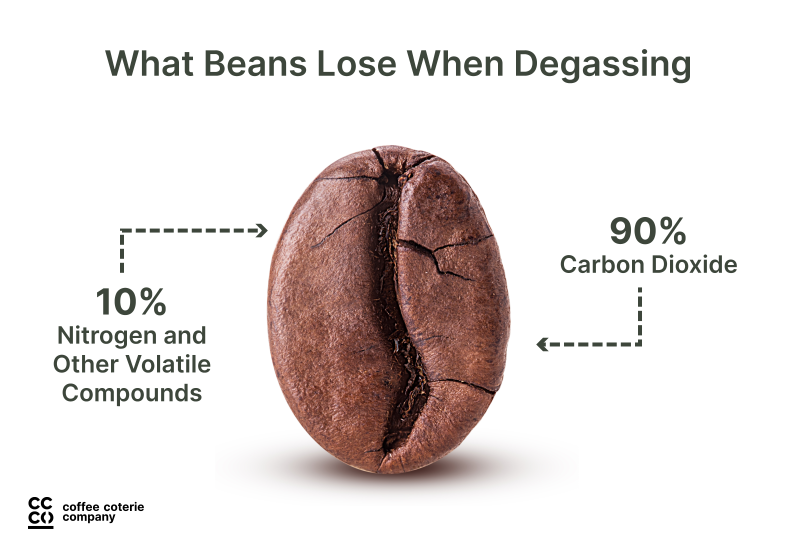
As soon as the coffee beans are ground, the increase in surface area causes the trapped gasses to release much more quickly. By pre-wetting the grounds with a small amount of hot water, it will immediately cause all the trapped carbon dioxide to discharge, triggering the bloom effect. This is what causes the puffing, swelling and bubbles during a coffee bloom.
Does Fresh Roasted Coffee Matter?
Like any food, fresh is always better. This also applies to the coffee beans you use to brew coffee. Freshly roasted beans naturally lose carbon dioxide and other gases as soon as it is roasted. This process occurs for a few weeks after the beans are roasted.
The majority of the trapped gasses will dissipate within the first week after the roasting process. The remaining gasses will slowly dissipate within a couple of weeks until the roasted coffee eventually turns stale. Many of the volatile compounds found in these gases are what give coffee its flavor, texture, and aromas. Therefore it is vital to keep these gases intact for as long as possible through proper storage.
Grinding coffee beans increases the surface area which then increases the rate at which gases are released. The increased surface area also accelerates the grounds’ exposure to oxygen, further degrading the flavor.
This is why coffee enthusiasts always prefer whole beans over pre-grounds. It is also the reason why many coffee drinkers choose to grind their beans right before brewing, this method slows down the loss of freshness.
Tip: If you purchase your beans in bulk, divide your beans into different containers with the unused portion for storage in an air-tight container. This will reduce the rate that your unused beans are exposed to oxygen.
Other Factors That Affect Coffee Bloom And Flavor
Aside from how fresh your beans are, there are other factors to consider that also affect how your coffee will bloom.
These factors include:
Roast
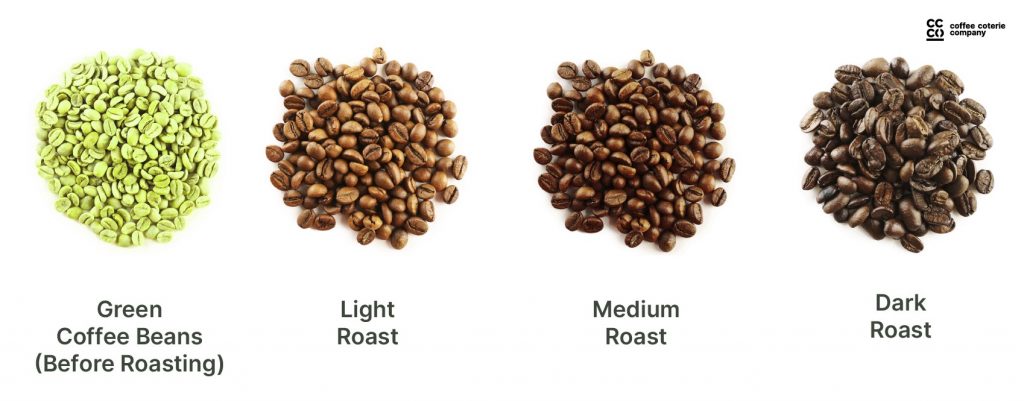
The type of roast has a significant influence on how your coffee blooms.
Darker roasts generally are more oily and create more gas during the roasting process. As coffee beans brown during roasting, the heat causes a chemical reaction that breaks down carbohydrates and creates gases. Darker roasts require longer roast time and as a result, more oil and gas are created in the process. As a general rule, darker roasts bloom bigger than lighter roasts because darker roasts contain more carbon dioxide.
In comparison, lighter roasts have less oil and gas trapped inside the beans. Since lighter roasts have less oil and gas, you will likely see less of a notable bloom. This is especially the case if you leave a light roast sitting around for a month or longer after the roast date (3).
Grind Particle Size

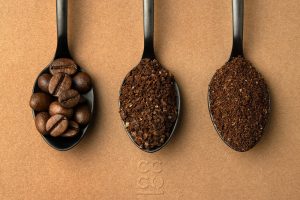
The size of your coffee grinds also has an influence on how blooming occurs. For instance, with coarser grinds the particle sizes are larger and as a result, bloom will happen at a more gradual rate. Larger particle sizes expose less gas and takes water longer to saturate and displace the gasses trapped in your coffee.
Smaller particles expose more surface area and enable trapped gases to be released quicker when exposed to hot water. This is why you might often see more vigorous and active blooms with a finer grind.
In our opinion there is no perfect grind size for blooming your coffee. Rather, you should adjust your grind size to match your brewing method (pour over, drip machine, french press, etc..).
This is a brewing parameter worth experimenting with, because different grind sizes and bloom time will affect the flavour you seek to extract from your coffee.
Storage Temperature
The temperature of where you store your coffee affects how fast gas will dissipate from your beans. Hotter temperatures will cause coffee beans to release gases much quicker than cooler temperatures.
We recommend you store your beans in a cool and dark environment away from heat sources such as an oven. A good place to store your coffee beans could be in the pantry or a cupboard.
Humidity
Humidity levels also affect how fast gases escape. If you store your beans in extremely dry environments, it will cause the trapped gasses in your beans to escape much quicker. On the contrary, too humid of an environment can also encourage mold and fungus growth.
The trick is to find a healthy balance between low and high humidity. Slowing down the escaping gases but as well protecting your beans from mold.
Hardness of Beans
Although this is not something you have exact control of, bean hardness also affects how well your coffee blooms. Harder beans are denser by nature and as a result, gases have a harder time escaping.
The harder the bean, the more difficult and longer it takes for gasses to make its way through and escape.
Origin of Beans
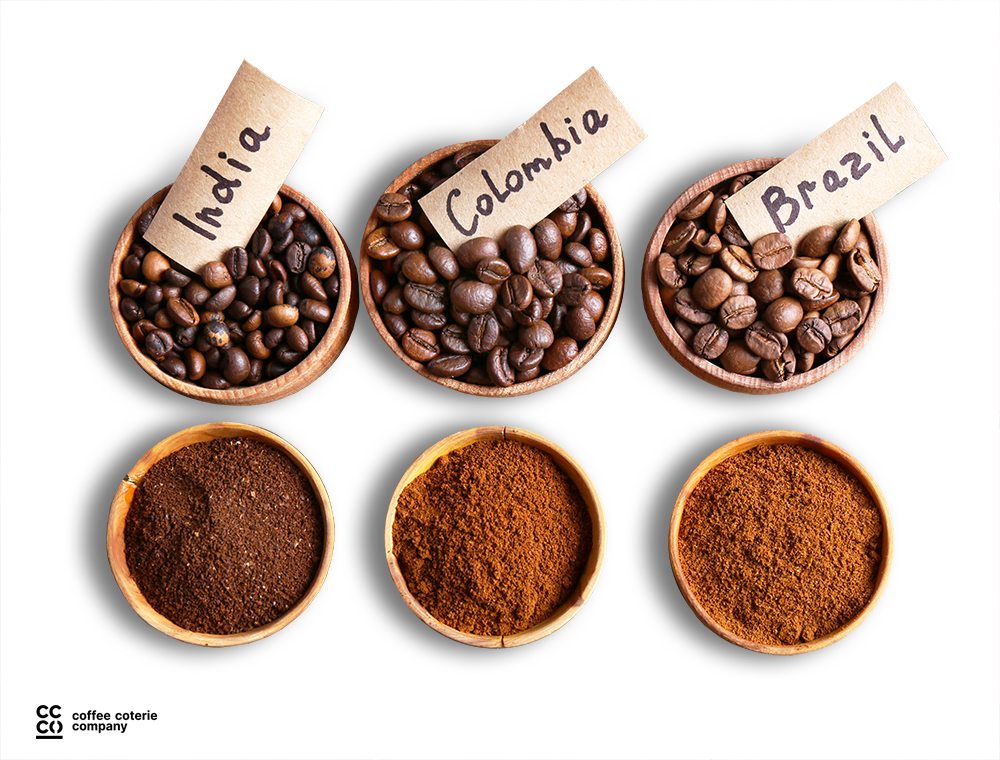
The origin of your beans also plays a role in how your coffee blooms. Although it might not be as apparent as the roast type, depending on the region some origins bloom more than others.
Fun fact: One of the appeals of specialty coffee is the ability to identify the exact origin of where the coffee beans were grown. This in return allows coffee enthusiasts to adjust their brewing process accordingly.
How To Bloom Your Coffee
The method behind blooming coffee is quite simple. It involves pouring hot water over your grinded coffee prior to brewing. Just enough so that it saturates all your grounds and becomes damp.
We have provided a list of tips below on blooming coffee with different brewing methods. Find your brewing method and see if you get more flavour out of your coffee with our blooming tips!
Pour Over
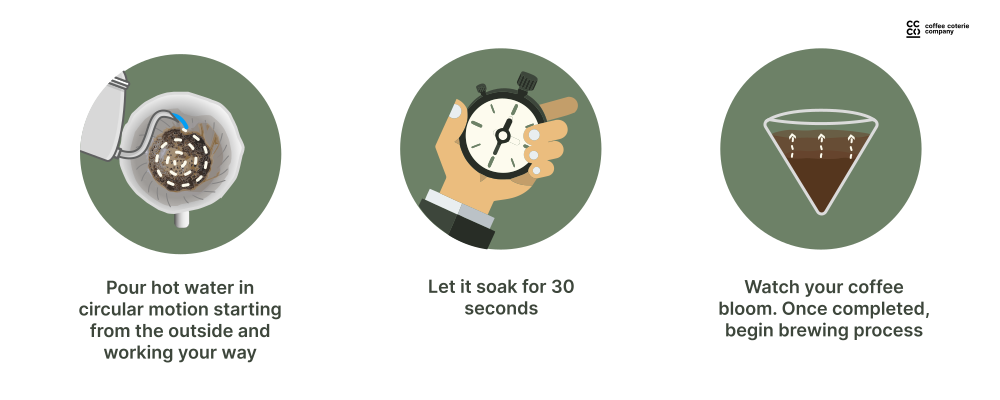
Pour over brewing is one of the methods that benefits most from blooming. This deliberate style of brewing requires precision and patiences. As such, blooming coffee with pour over requires 40-80 grams of hot water. With a gooseneck kettle, pour hot water in circular motion starting from the outside and working your way inwards.
Make sure that all your grounds are evenly saturated but not to the point where the water drips through the filter and starts the brewing process.
Let it soak for 30-60 seconds and watch your coffee bloom!
French Press
A french press is one of the more popular methods of brewing due to its simplicity and ease of use. As such, blooming coffee in a french press is also quite easy.
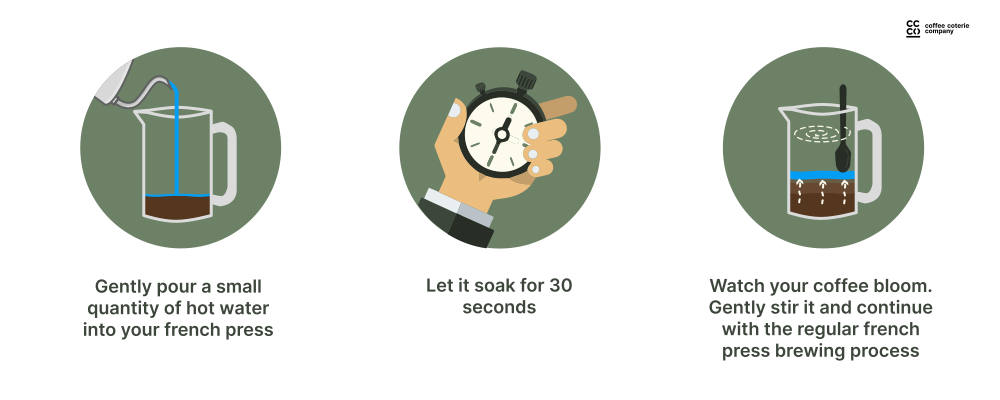
With your coffee grounds already in your french press, gently pour a small quantity of hot water into your french press (remember that french press calls for coarse grinds).
Let this soak for approximately 20-30 seconds and watch your coffee bloom. Afterward, gently stir it and continue with the regular french press brewing process.
With freshly roasted and grounded coffee beans, you should notice an instant bloom form characterized by bubbles, foam, and swelling.
Tip: Bloom time for french press is counted separately from the regular 3-4 minutes of brew time. So make sure to incorporate bloom time ahead of the regular brew duration.
Automatic Drip Coffee Makers
Although manually blooming your coffee in an automatic drip machine might sound counterintuitive, the extra steps taken could drastically change the results. It is definitely worth experimenting at least once to see if you can get better tasting coffee.
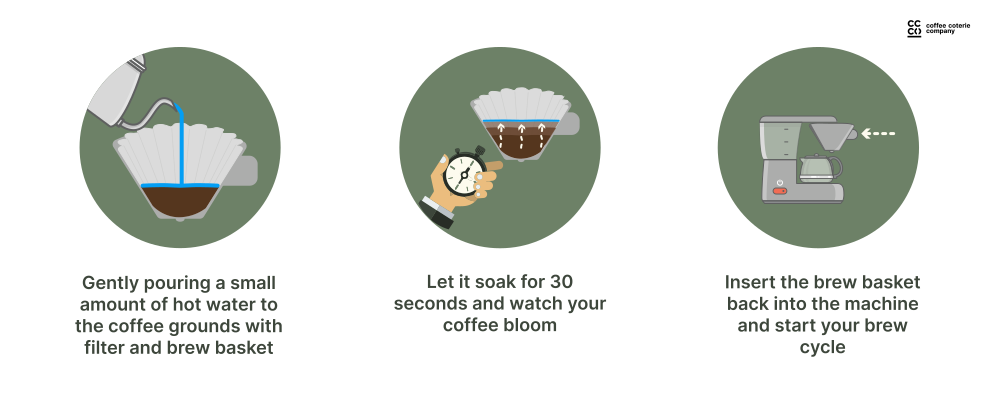
With a drip machine, blooming can be achieved by simply pouring a small amount of water to the coffee grounds while it is in the filter and brew basket (prior to pressing the brew button). You only need enough water to saturate the coffee grinds, every machine will be a little different. We suggest you let the grounds soak for 30-90 seconds while it blooms.
Tip: Make sure to do it over your carafe or a cup to catch any water that might filter through.
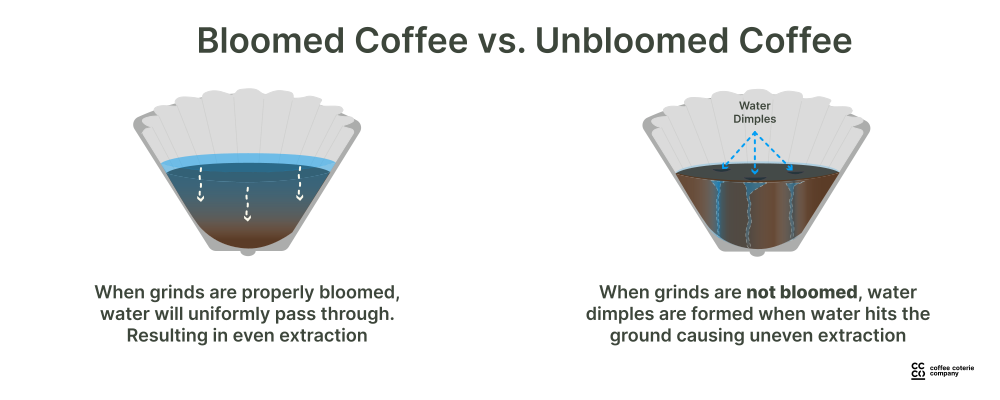
Once the bloom time is completed, simply insert the brew basket back into the machine and start your brew cycle. When done correctly, you will notice that after brewing there are no dimples in your wet grounds. These dimples are formed when water hits the unbloomed grounds causing uneven extraction. When grounds are properly bloomed, water tends to sit on top of the grinds and then work its way through in a more uniform manner. This enables more thorough extractions and results in a better cup of coffee.
If you own one of the more premium automatic drip coffee makers, you might already have a coffee blooming feature built in. Look out for this feature on your machine, it may also be called pre-infusion on automatic drip machines.
Cold Brew
Cold brew coffee is probably one of the easiest to make! It’s tasty and normally yields lower acidity levels compared to hot brewed coffee (an amazing option for anyone with a sensitive stomach).
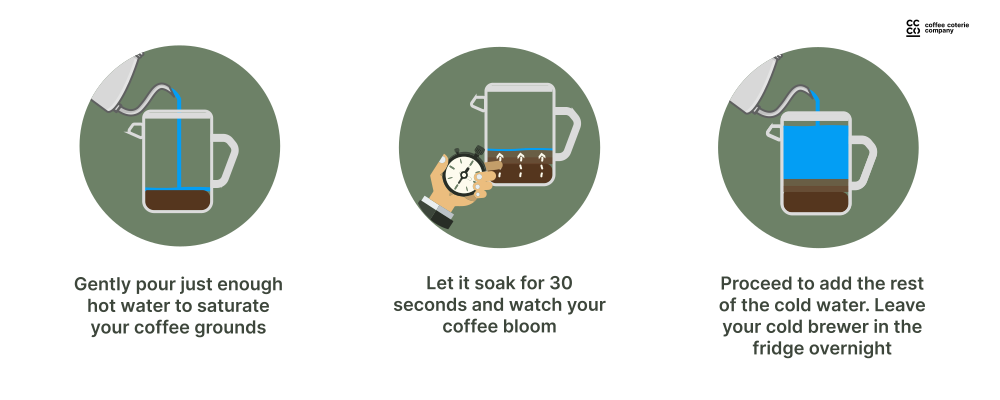
Coffee blooming for cold brew is a method known as hot bloom. Simply add your coffee grounds (coarse grind) to your cold brew maker and pour just enough hot water to saturate it. Let it sit for 30-50 seconds for the coffee to bloom and then proceed to add the cold water. We recommend you leave your cold brewer in the fridge overnight for 12-24 hours.
Now, I know what you might think. Doesn’t adding hot water to cold brew defeat the whole purpose of cold brew?
Yes and no. The idea behind the hot bloom method is to extract as much flavour and aroma from your coffee before starting the cold brewing. Flavours will be more intense and depending how long you let it bloom the intensity will vary. This is great if you enjoy cold brews with milk and cream. The increase in flavours prevents a diluted cup when adding milk and cream.
Hot blooming is worth experimenting with even if you enjoy your cold brew black. The additional step takes less than a minute and you might end up with a new trick to show your friends and family!
Final Thoughts
Whatever your brewing method is, there is one thing we are confident about. With freshly roasted and grounded coffee, you are sure to brew a better-tasting cup when you add coffee blooming to your technique.
For us, coffee blooming is a part of our brewing ritual. No matter the method, a perfect bloom is a sign of what is to come. We use it as an indicator of freshness, roast degree, and whether all the best characteristics of the coffee will be extracted.
Don’t be afraid to experiment with bloom time, different roasts, and grind size. The world of coffee is dynamic, there are many ways to brew amazing coffee and we encourage all our readers to find the methods that work best for them.
We hope this article has inspired you to incorporate and experiment with blooming coffee in your coffee ritual. Feel free to share with us your results and findings in the comment section below. Happy brewing.
Frequently Asked Questions
Why is my coffee not blooming?
While there are many reasons why your coffee grounds are not blooming, one of the most likely reasons is old coffee.
If your coffee is not blooming and it has been sitting in your cupboard for a few weeks, it is most likely preemptively degassed already. This also means that the flavor and aromas have already started deteriorating.
Another cause could be that the packaging used to store your beans was not sealed to prevent oxidation. Next time you go shopping for coffee beans, see if there is a valve on the bag. Reputable coffee roasters always package their coffee in a valve bag, as it prevents oxidation and deterioration.
Remember that the type of roast also has an impact on how much your coffee blooms. Generally, lighter roasts and older beans will have less vigorous blooms.
Blooming coffee is an excellent way to identify your coffee’s freshness and roast degree. With experience you will be able to start seeing patterns with the bloom with different roasts and as your coffee ages.
References
- https://perfectdailygrind.com/2020/04/how-to-store-coffee-at-home/
- https://www.ncausa.org/about-coffee/how-to-store-coffee
- https://www.northstarroast.com/demystifying-the-coffee-bloom/